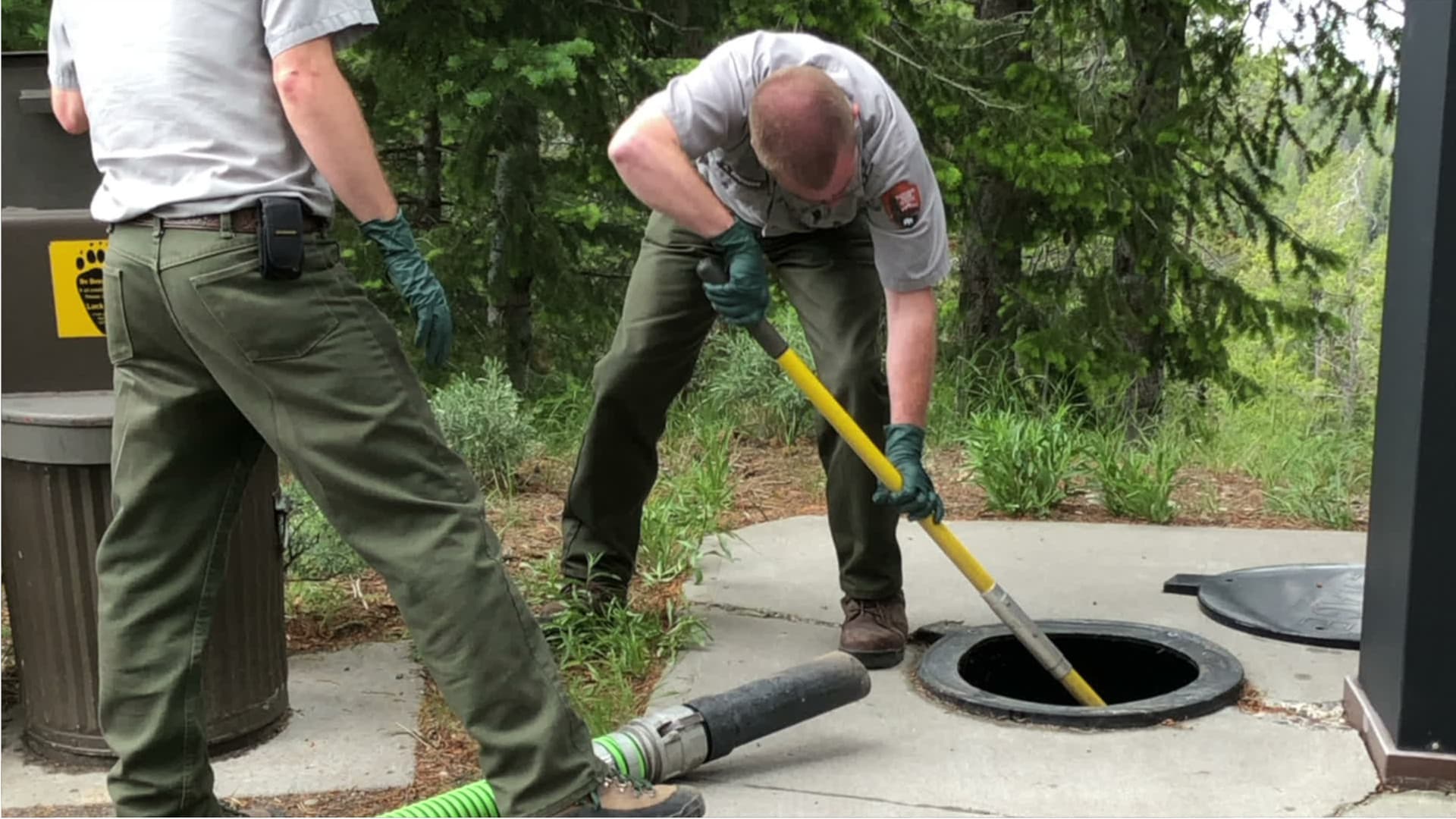
Warren, Sterling Heights, Clinton Township & surrounding Macomb County cities. Cast iron drains, clay sewer laterals, and 120–175 ppm hard water make Macomb County one of Michigan's most drain-intensive markets.
By RateYourPlumber Editorial · Updated May 2026
Why Drain Problems Hit Harder in Macomb County
Three infrastructure factors make Macomb County drain issues more severe — and more recurring — than most Michigan markets:
Cast Iron and Galvanized Drain Pipes (Pre-1975 Homes)
Warren, Roseville, Eastpointe, and south Sterling Heights have high concentrations of pre-1975 construction. Homes built between 1945 and 1965 — especially in east Warren along the Van Dyke and Hoover corridors — frequently used galvanized steel for interior drain arms before the industry shifted to cast iron and then PVC. Galvanized steel corrodes from the inside out, building up orange-brown flakes that reduce drain diameter to a trickle before the pipe fully blocks. Cast iron from the same era creates rough inner surfaces that catch grease and hair at a far higher rate than smooth PVC. Standard snaking provides temporary relief — descaling or replacement is often the real fix in these homes.
Clay Sewer Laterals + Root Intrusion
Vitrified clay sewer lines are the dominant lateral material throughout older Macomb County. These bell-and-spigot clay joints were code-compliant when installed but shift with Michigan's freeze-thaw soil cycles over decades, creating gaps at every joint. Mature silver maples, red oaks, and Norway maples — trees commonly planted in postwar Macomb subdivisions — send hair-thin root tips into those gaps seeking moisture. Once inside, roots expand and form a mesh that catches waste, eventually causing full backups. If you're having the same main line snaked twice a year in Warren (48091, 48093), Roseville (48066), or Eastpointe (48021), root intrusion into a clay lateral is the most likely cause — and may require sewer line repair rather than repeat snaking.
Great Lakes Water Authority Hard Water — 120–175 ppm
Macomb County receives treated water through the Great Lakes Water Authority (GLWA), which draws from Lake Huron and Lake St. Clair. While GLWA water meets all EPA drinking standards, it tests consistently at 120–175 parts per million hardness — firmly in the "very hard" classification. Calcium and magnesium ions precipitate inside drain pipes, trap arms, and P-traps as whitish-gray scale. This narrows effective drain diameter independently of grease or hair clogs. The scale is impervious to chemical cleaners and requires mechanical removal (jetting or descaling). Homes without whole-house water softeners — the majority of Macomb County households — accumulate this buildup fastest. Newer Shelby Township and Chesterfield homes with PVC plumbing are affected by hard water scale too, even without the additional clay-and-root problem.
Macomb County vs. Wayne County Sewer Systems: What Homeowners Should Know
Wayne County — particularly Detroit and older inner-ring suburbs like Dearborn, Highland Park, and Hamtramck — still operates significant sections of combined sewer overflow (CSO) infrastructure, where sanitary sewage and stormwater share the same pipes. During heavy rain events, these combined systems surcharge and can overflow into basements and waterways. The Wayne County Water Quality District manages an ongoing consent decree to address CSO volumes.
Macomb County municipalities predominantly operate separated sanitary and stormwater systems. The Macomb County Public Works Office, under the Clean Water Plan, has invested in separating combined sewers and lining aging sanitary mains throughout the county. This is good news for most Macomb County homeowners — but it comes with a specific implication.
In a separated system, your individual sewer lateral's condition matters far more than it would in a CSO city. A cracked or root-invaded clay lateral in Warren or Roseville allows groundwater infiltration (called "I&I" — inflow and infiltration) directly into the sanitary main during spring snowmelt and heavy rain. This increases surcharge pressure in the sanitary system for the entire street, raising basement backup risk even for neighbors whose laterals are intact. The Macomb County Public Works Office has issued advisories on this repeatedly. The practical takeaway: lateral condition in Macomb County is a neighborhood issue, not just a personal one.
Macomb County Public Works — Lateral Responsibility Line
In most Macomb County municipalities, the homeowner owns and is responsible for the entire sewer lateral from the house to the public main — including the section under the street right-of-way. Confirm with your specific city or township, as ordinances vary. Some municipalities (including parts of Warren) have cost-share or reimbursement programs for lateral replacement; ask your drain plumber to confirm the connection point location before any major repair.
City-by-City Drain Risk in Macomb County — By ZIP Code
Drain clog frequency and severity in Macomb County tracks closely with the era of construction and the pipe materials installed at the time. Older cities built out between 1940 and 1970 face compounded problems: aging pipe material, established tree canopy, and the natural lifecycle of clay joints. Newer municipalities built primarily after 1980 have different — and generally less severe — drain challenges.
| City / Area | Key ZIPs | Build Era | Primary Pipe | Risk Level | Notes |
|---|---|---|---|---|---|
| Warren (East) | 48091, 48093 | 1945–1965 | Galvanized + clay lateral | Very High | Galvanized drain arms inside walls corrode shut; clay mains under east Warren streets root-invaded by silver maples |
| Warren (West) | 48088, 48089, 48092 | 1955–1975 | Cast iron + clay lateral | High | Post-Korean War subdivisions west of Mound Rd; cast iron still original in most homes, now 50–70 years old |
| Roseville | 48066 | 1950–1970 | Cast iron + clay lateral | Very High | Shallow lots, dense tree canopy from postwar planting; clay joints regularly infiltrated by oak and maple roots |
| Eastpointe | 48021 | 1940–1960 | Clay lateral + older cast iron | Very High | Some of the oldest housing stock in Macomb County; original clay sewer laterals frequently cracked or offset |
| St. Clair Shores | 48080, 48081, 48082 | 1950–1970 | Cast iron + clay lateral | High | Lakefront frost heave shifts clay joints; cottages converted to year-round homes often still have undersized drains |
| Fraser | 48026 | 1955–1975 | Cast iron + transitional PVC | Moderate–High | Mix of eras; south Fraser (near 13 Mile) retains older clay; north Fraser has more PVC |
| Sterling Heights (South) | 48310, 48311 | 1965–1985 | Cast iron transitioning to PVC | Moderate | Older south-end sections near Dequindre corridor have cast iron; most mid-era homes switching to PVC |
| Sterling Heights (North) | 48312, 48313, 48314 | 1975–1995 | PVC | Low–Moderate | Later-built subdivisions used PVC from the start; grease and hard water scale are primary issues, not root intrusion |
| Clinton Township | 48035, 48036, 48038 | 1960–1985 | Cast iron / PVC mix | Moderate | Large township with wide age range; south of Hall Road retains older cast iron, north is mostly PVC |
| Shelby Township | 48315, 48316, 48317 | 1980–2005 | PVC | Low | Predominantly newer construction with PVC throughout; drain issues are grease or hard-water scale driven, not structural |
| Chesterfield Township | 48047, 48051 | 1990–2015 | PVC | Low | Newer development corridor; very little clay lateral infrastructure; sump and ejector pump issues more common than drain clogs |
| Macomb Township | 48042, 48044 | 1995–2015 | PVC | Low | Among the newest subdivisions in the county; drain issues rare but hard water (120–175 ppm) still causes fixture scale |
| Mount Clemens | 48043 | 1900–1950 | Clay + old cast iron | Very High | Oldest city in Macomb County; original city sewer infrastructure; some laterals approaching 100 years old |
Risk classifications are based on predominant construction era, known pipe materials, and tree canopy density. Individual property conditions vary.
East Warren's Galvanized Pipe Era — 1945 to 1965
The eastern sections of Warren — roughly east of Van Dyke Avenue, covering ZIP codes 48091 and the western edge of 48093 — represent some of the oldest residential plumbing in Macomb County. These neighborhoods were built primarily between 1945 and 1965 to house returning veterans and workers at the nearby GM Technical Center and defense manufacturing plants along Eight Mile Road.
At the time of construction, galvanized steel was the standard material for interior drain arms — the pipes running from sinks, tubs, and appliances to the main stack. Galvanized steel holds up reasonably well for 20–30 years, but at 60–80 years of age (where most east Warren galvanized pipes now sit), corrosion has typically closed pipe diameter by 50–80%. A 1.5-inch drain arm becomes effectively a 0.5-inch drain arm. No amount of snaking or chemical treatment restores flow — the pipe must be replaced.
The tell-tale sign of galvanized failure: multiple fixtures drain slowly at the same time, but a main line camera shows no obstruction in the clay lateral. The blockage is inside the walls, in pipes a camera cannot reach without opening drywall. A licensed plumber can perform a flow test at each fixture stack to isolate the problem section. See the best plumbers in Macomb County for verified contractors familiar with east Warren's galvanized-era homes.
Homes in east Warren (48091) that have never had a whole-home drain survey should treat this as a near-term capital expense, not an emergency repair. Replacing galvanized drain arms proactively costs $1,500–$4,000 per stack. Waiting for a full blockage behind finished walls costs considerably more.
Oak and Maple Root Intrusion in Macomb County's Older Subdivisions
Why These Trees Are the Problem
The postwar Macomb County building boom of the late 1940s through the 1960s saw municipalities and developers plant silver maples, Norway maples, and red oaks as street and yard trees throughout new subdivisions. These species were chosen for fast growth and dense shade — both excellent qualities. But their root systems are aggressive.
- Silver maple: Root spread 2–3x canopy diameter. Most aggressive toward moisture and clay joints.
- Red oak: Deep tap root plus wide lateral spread — often reaches clay laterals 30–50 feet from trunk.
- Norway maple: Dense fibrous root mat in top 18 inches of soil — exactly where most clay laterals run.
Highest-Risk Neighborhoods
Root intrusion calls are most concentrated in neighborhoods where the street tree canopy has matured over 50+ years. These areas consistently generate the highest repeat-service calls for drain plumbers operating in Macomb County:
- East Warren (48091): 9–10 Mile / Van Dyke grid — silver maples planted 1950–1960s now at full maturity
- Roseville (48066): North of 9 Mile, west of Gratiot — dense postwar subdivision grid
- Eastpointe (48021): East 9 Mile corridor — among oldest platted residential blocks in the county
- St. Clair Shores (48080–48082): Lakefront-adjacent streets with mature Norway maples
Root Intrusion Treatment Progression
Snaking vs. Hydro Jetting — Which Method for Which Macomb County Situation
The answer depends heavily on your home's age, pipe material, and whether you have a first-time or recurring clog. Generic guidance that ignores these variables leads to repeat service calls and wasted money.
Drain Snaking (Augering)
Hydro Jetting
Camera Inspection
Which Method — Quick Decision Guide
Seasonal Drain Cleaning Calendar for Macomb County Homeowners
Michigan's climate creates two distinct drain stress seasons that Macomb County homeowners should plan around. Booking maintenance outside these peaks saves money and guarantees next-day availability.
February — Pre-Snowmelt Preparation
Preventive- Macomb County averages 40–50 inches of snow annually. When temperatures rise in late February and March, that snowpack melts rapidly — often within 1–2 weeks.
- Groundwater table rises sharply during snowmelt, increasing hydrostatic pressure on basement floors and sewer lateral joints. Any gap in a clay lateral becomes a groundwater infiltration point.
- Best time to schedule: pre-snowmelt camera inspection and main line jetting. You'll get faster scheduling (demand spikes in March) and you'll know your lateral's condition before the highest-stress period.
- Priority: Homes in east Warren (48091), Roseville (48066), and Eastpointe (48021) with known clay laterals.
March–April — Peak Backup Season
High Risk- This is the busiest period for drain plumbers across all of Metro Detroit. Macomb County Public Works typically receives the highest volume of sanitary backup complaints in March and April.
- Combined snowmelt + spring rain events in March–April routinely surcharge sanitary mains in older Warren, Roseville, and Eastpointe neighborhoods.
- If you haven't already had your main line serviced, you're now competing with hundreds of neighbors for the same drain plumbers. Emergency pricing applies.
- Emergency response times stretch from same-day to 48–72 hours during peak weeks. This is not the time to discover your clay lateral is compromised.
May–August — Low-Stress Window
Low Risk- Summer is the best season to schedule non-emergency drain work in Macomb County. Ground conditions are stable, plumbers have open schedules, and you can often negotiate pricing.
- Good summer projects: camera inspection for first-time purchase, hydro jetting kitchen drain before grease season (holidays), CIPP lining or lateral replacement when you have time for excavation coordination.
- Hard water scale continues accumulating year-round — no seasonal break. Summer is an ideal time to address fixture and drain trap scale in Sterling Heights, Shelby, and Chesterfield homes.
September — Pre-Leaf Season Service
Preventive- Metro Detroit's fall leaf season runs October through mid-November. Decomposing leaves contribute organic matter to storm drains and, when combined with kitchen grease entering sanitary laterals, accelerate biological buildup in clay and cast iron pipe walls.
- September is an ideal second maintenance window: kitchen drain jetting ahead of Thanksgiving and holiday cooking season, and a main line camera check before the ground freezes for the winter.
- Scheduling in September avoids the October rush when basement waterproofing and drain plumbing companies both spike in demand.
October–November — Fall Leaf Season Risk
Moderate Risk- Leaf volume clogs street-level storm drain catch basins throughout Macomb County, causing localized surface flooding during autumn rain events.
- While stormwater and sanitary systems are separated in most Macomb municipalities, surface flooding near foundation drains can still introduce water at the basement perimeter, stressing sump pumps and floor drains.
- Kitchen drain clogs spike in November and December as holiday cooking sends grease and food solids through lateral systems that may already be partially narrowed by hard water scale.
December–January — Ground Freeze
Freeze Risk- Macomb County ground typically freezes 18–36 inches deep in January. Shallow drain laterals — particularly those on corner lots or exposed runs — are vulnerable to freeze in extreme cold snaps.
- Outdoor hose bib drains, garage floor drains, and crawl space drain lines are highest freeze risk.
- If you have a known slow drain going into winter, have it cleared before the ground freezes. A partial obstruction in a clay lateral is much harder to address when ground excavation would require thawing equipment.
Full Drain Cleaning Price Table — Macomb County
| Service | Price Range | Notes |
|---|---|---|
| Kitchen Drain Snake | $125 – $250 | Grease clogs common in Macomb County's pre-1975 homes; GLWA hard water accelerates trap buildup |
| Bathroom Drain Snake | $125 – $200 | Hair + soap scum; scale from 120–175 ppm hard water narrows trap diameter |
| Main Sewer Line Snake | $200 – $350 | Slow drains throughout home; check for clay lateral root intrusion (Warren 48091, Roseville 48066, Eastpointe 48021) |
| Hydro Jetting (residential) | $300 – $600 | Best for cast iron scale and root debris in clay laterals; always camera-confirm pipe integrity first |
| Sewer Camera Inspection | $200 – $400 | Often bundled with jetting; essential for recurring clogs and pre-purchase inspections in pre-1975 homes |
| Camera + Hydro Jetting Bundle | $450 – $800 | Best value for chronic clog situations in Warren, Roseville, and Eastpointe |
| Root Treatment (chemical foaming) | $100 – $200 | Annual maintenance after root clearing; copper sulfate or dichlobenil formulations used by Macomb area plumbers |
| CIPP Pipe Lining (lateral) | $3,000 – $8,000+ | Permanent fix for cracked or root-invaded clay laterals; no excavation; seals joints from inside |
| Emergency Same-Day | +25% – 50% premium | Added to base service cost; surges further during March–April peak backup season |
Prices reflect Macomb County market 2025–2026. Actual cost depends on access, pipe condition, job complexity, and seasonal demand.
What to Do — and Never Do — in Macomb County Homes
Do This
- • Use a plunger first for slow single drains
- • Use a drain strainer to catch hair and debris
- • Run hot water for 30 seconds after every kitchen use
- • Schedule annual hydro jetting on kitchen drain if home is pre-1975
- • Get a camera inspection if the same drain clogs twice in a year
- • Book preventive drain service in February before snowmelt season
- • Ask your plumber to confirm whether your lateral is clay or PVC before any major work — verify licensure through Michigan LARA
- • Install a whole-house water softener to reduce scale from GLWA's 120–175 ppm water
- • Have your sump pump inspected annually — especially in Chesterfield and newer townships where sump issues outpace drain clogs
Never Do This
- • Use Drano, Liquid-Plumr, or lye-based cleaners in cast iron or galvanized pipes
- • Flush grease down kitchen drains (even "liquid" cooking oil solidifies in cold clay laterals)
- • Flush wipes — even "flushable" ones cause sewer backups in Macomb County's separated sanitary system
- • Ignore slow drains throughout the whole house — this is a main line issue, not a fixture issue
- • Snake the same main line 3+ times without getting a camera inspection
- • Hydro jet a clay lateral without camera confirming its condition first
- • Wait until March to schedule drain service — that is peak backup season across all of Macomb County
Licensed Plumber Reality in Macomb County
Counted from the Michigan LARA license database across the 21 Macomb County communities we track.
Snaking a drain needs no permit — but the lateral repair that so often follows a Macomb County camera inspection does, and only a master plumber can pull it. There are 91 active masters across the county's 21 communities, inside a pool of 662 active licenses of any type. With 72% of the 2,382 licenses ever filed here now lapsed, confirm the license is currently active before the jetter truck rolls.
Source: Michigan LARA license records, analyzed August 2026 — full statewide analysis.
Frequently Asked Questions
How much does drain cleaning cost in Macomb County, MI?
▾
Drain cleaning in Macomb County runs $125–$250 for a standard snake (kitchen, bathroom, or floor drain). Hydro jetting ranges $300–$600 depending on line length. Sewer camera inspection adds $200–$400. Emergency service (nights, weekends) adds 25–50%. Warren and Sterling Heights have the highest concentration of licensed drain plumbers so you can usually get competitive quotes.
Why do drains clog so often in Warren and Sterling Heights?
▾
Older sections of Warren and Sterling Heights were built in the 1950s–1970s with cast iron drain pipes and clay sewer laterals. Cast iron corrodes from inside, creating rough surfaces that trap grease, hair, and soap scum faster than modern PVC. Clay sewer lines crack over decades, letting in tree roots — especially from the large maples common in Macomb County.
Is hydro jetting worth it for Macomb County homes?
▾
Yes, for homes with repeat clogging or root intrusion. Hydro jetting uses 3,000–4,000 PSI of water pressure to completely clear cast iron and clay lines in a way that snaking cannot. Most Warren, Sterling Heights, and Clinton Township homeowners who switch to jetting stop calling for annual snaking. Budget $300–$600.
Do I need a camera inspection before drain cleaning in Macomb County?
▾
If you've had the same drain cleaned more than once in two years, yes. Camera inspection ($200–$400) reveals whether you have root intrusion in a clay lateral, a collapsed section, or just grease buildup. It also tells your plumber exactly which method to use — snaking, jetting, or lining. Skip the camera only for clearly isolated clogs.
Can Macomb County's hard water cause drain clogs?
▾
Yes. At 120–175 ppm, Macomb County water supplied through the Great Lakes Water Authority (GLWA) is classified as very hard. Minerals precipitate inside pipes and fixtures, narrowing effective drain diameter over time. This is separate from grease or hair clogs — scale buildup is gradual and often invisible until flow drops significantly. Homes with whole-house water softeners experience this much less.
What's the difference between snaking and hydro jetting for Macomb County sewer lines?
▾
Snaking (also called augering) punches a hole through the clog — fast and cheap ($125–$250) but doesn't clear the pipe walls. Hydro jetting blasts everything off the pipe walls using high-pressure water — thorough but costs more ($300–$600). For cast iron and clay lines common in Macomb County, jetting provides longer-lasting results, especially when root intrusion or heavy scale is present.
Is it safe to use Drano in Macomb County's older homes?
▾
No. Chemical drain cleaners damage cast iron pipes (common in pre-1975 Warren, Sterling Heights, and Clinton Township homes), eat through older rubber gaskets, and are ineffective against root intrusion. They also harm your septic system if applicable. Call a licensed plumber — snaking costs $125–$250 and doesn't risk permanent pipe damage.
Do oak and maple tree roots cause drain problems in Macomb County?
▾
Yes — this is one of the most common sewer lateral problems in older Macomb County subdivisions. Mature oak and silver maple trees planted during the postwar building boom of the 1950s–1970s now have root systems that extend 30–50 feet from the trunk. Clay sewer laterals installed in the same era have bell-and-spigot joints that separate with ground movement, creating gaps that attract root tips seeking moisture. Neighborhoods most affected include east Warren (ZIP 48091, 48093), Roseville (48066), and Eastpointe (48021). Once roots establish inside a clay lateral, snaking provides 6–18 months of relief before they regrow. Hydro jetting buys more time (2–3 years), but camera inspection followed by pipe lining or replacement is the permanent fix.
Does Macomb County have a combined or separated sewer system?
▾
Macomb County municipalities primarily operate separated sewer systems — sanitary sewage and stormwater run in separate pipes. This contrasts with Wayne County cities like Detroit, which still have large combined sewer overflow (CSO) areas where sanitary and stormwater share the same pipes. The practical implication for Macomb County homeowners: basement backups during heavy rain events are usually caused by a surcharged sanitary main — not a combined overflow — meaning your individual lateral condition matters. A compromised clay lateral in Warren or Roseville during spring snowmelt can allow groundwater infiltration directly into the sanitary system, increasing surcharge risk for the entire block.
When is the worst time of year for drain problems in Metro Detroit?
▾
Two peak seasons: (1) March–April during snowmelt, when frozen ground thaws rapidly and sends high volumes of water into sewer systems. Clay laterals with existing cracks let in ground infiltration, increasing backup risk. (2) October–November during fall leaf season, when street leaves and debris clog storm drains and the decomposing organic matter contributes to grease-trap-style buildup in kitchen laterals. Booking drain cleaning in February (before snowmelt) and September (before leaf drop) puts you ahead of both peak demand periods.
Sources & References
Find a Licensed Drain Plumber in Macomb County
Warren · Sterling Heights · Clinton Township · Shelby Township · Macomb Township · Roseville · Eastpointe · St. Clair Shores · Fraser · Mount Clemens